Shopping agents can smell a discount

At RevLifter, we’ve spent years getting good at spotting one type of shopper: the deal seeker. The person who won't check out without a code, who opens a coupon site in a second tab, who abandons a basket not because they don't want the product but because they're holding out for a better price.
We built a whole use case around catching them, because the alternative, discounting everyone to catch the few who need it, is exactly the kind of blanket promotion that quietly wrecks a margin.
That deal seeker just got a robot cousin, and it's a lot more patient than the human version.
Shoppers are already handing the job over
58% of shoppers now use AI instead of traditional search to find product recommendations, and once someone's using it, 72% treat it as their main way to research products and brands.
Other people have different numbers, but the point is it’s on the rise.
That's not a curiosity or an experiment anymore. That's a real, sizeable slice of your traffic arriving via a route your analytics probably weren't built to see clearly.
(Check your own analytics for your own numbers)
It doesn't stop at research either. In a Semrush survey of over 1,000 US shoppers, half had bought something after researching it with AI, and 22% completed the purchase within the AI tool itself, without visiting the retailer's site at all.
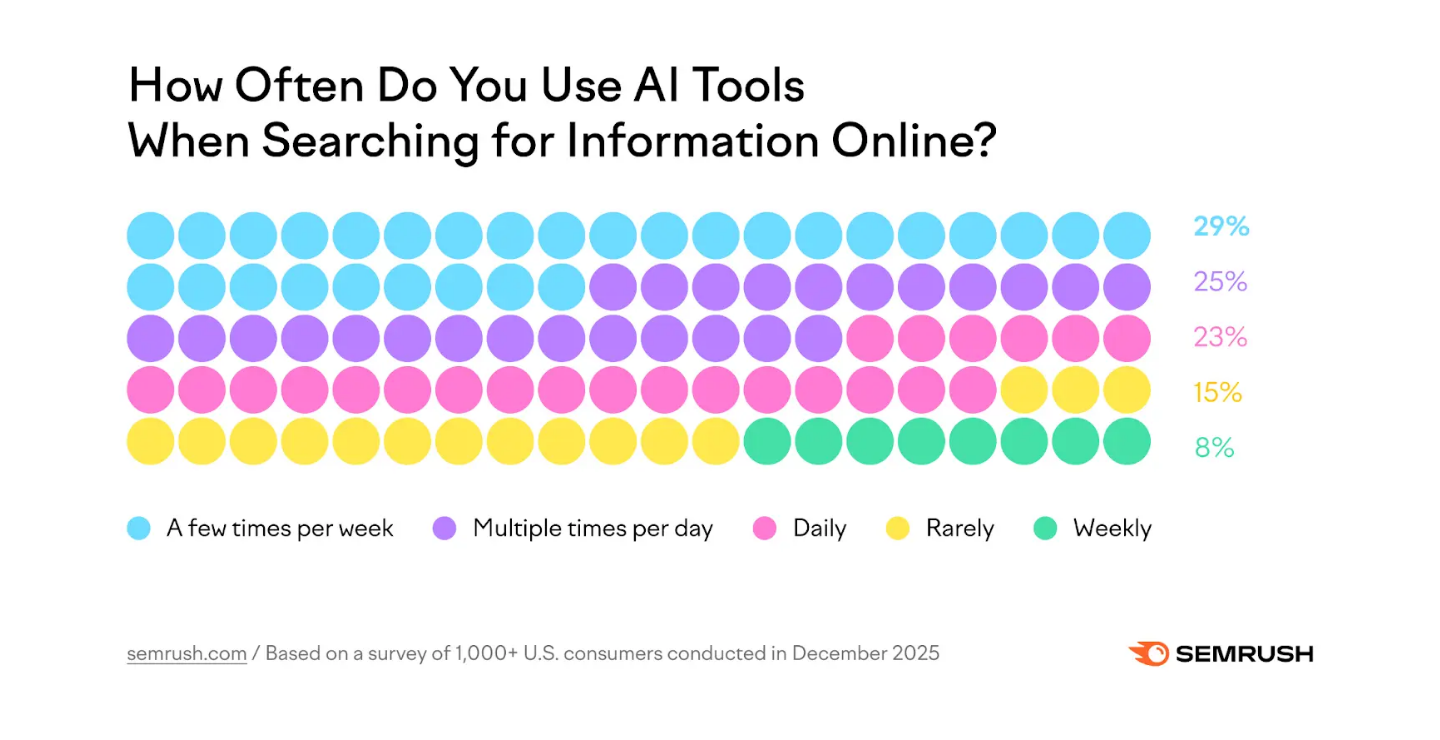
And AI isn't just helping people buy. In a separate, larger Semrush survey of 2,338 US consumers, 57.5% had been talked out of a purchase by an AI chatbot's advice. Narrow that to people who specifically use chatbots for product research, and it climbs to 80.93.
Read those two studies together, and the picture is obvious. AI agents aren't just discovering products. They're doing exactly what a sharp deal-seeker does: comparing, hesitating, and deciding that your price isn't good enough yet. They're just doing it at a scale and a speed no human ever could.
Three ways an agent is a worse deal seeker than a person
A human deal seeker is annoying but limited. They get bored, and they forget. They have fifteen other browser tabs demanding attention and a life outside your checkout page. An agent has none of that, which changes the math on every discount you run.
It doesn't get tired
A person gives up hunting for a code after five minutes and two failed attempts. An agent doesn't get tired of checking because it isn't spending its own time.
A leak that used to cost you a bit of margin from the small number of shoppers determined enough to go looking now scales to every single visit made on someone's behalf.
It doesn't have loyalty
A human deal seeker might still like your brand enough to buy anyway if the code doesn't turn up. An agent has no soft spot. It's optimising for one number, and brand affinity isn't a variable in that calculation.
That's a problem for anyone whose promotion strategy has quietly been leaning on goodwill to paper over the gaps.
It doesn't leave a visible signal
This is the one that should worry you most. A hesitating human gives you something to read: they linger on the page, they open another tab, they add something to a basket and walk away. That behaviour is the raw material every intent-based targeting system runs on.
An agent's version of hesitation is an API call you can't see inside. You lose the browsing behaviour that used to tell you who actually needed the nudge, and who was already reaching for their card.
What this doesn't mean
It doesn't mean panic, and it doesn't mean switching off personalisation until someone works out what agents "really" want. It means the same discipline that's always separated smart promotions from blanket ones now has a new audience to apply it to.
BCG found that redirecting a quarter of mass-promotion spending to personalised offers increased ROI by 200%, because personalised offers were roughly twice as effective as blanket ones to begin with. That finding didn't have an asterisk for "unless the shopper is a bot." The principle holds. Know who needs the incentive before you show it. The only thing that's changed is who's doing the asking.
The retailers who get caught out here won't be the ones using AI badly. They'll be the ones who never noticed it changed who's on their site at all. Amazon opening its ad inventory in ChatGPT this month is another sign of where this is heading: agents aren't a side channel anymore; they're becoming a front door.
What to actually do about it
Three places to start, none of which require ripping up your current strategy.
First, look at what triggers your existing deal-seeker and exit-intent campaigns. If the trigger is "this visitor is on a coupon-related page" rather than a genuine signal of hesitation, an agent will hit that trigger every single time it checks a price, whether the shopper behind it needed convincing or not. Tighten the definition of intent before agent traffic makes a loose one expensive.
Second, look at your pricing and product data the way something that isn't a person would read it. Is your best available price the one shown to anyone who asks, including the agent? If so, you don't have a targeting strategy. You have a public price list with extra steps.
Third, treat agent-originated orders the way you'd treat any new channel: as unproven until measured. Run them against a control group the same way you would a new campaign, because without one, you can't tell whether an offer created that sale or simply handed margin to a shopper, human or otherwise, who was buying anyway.
The deal seeker isn't a new problem. It's the same one RevLifter was built to solve, wearing a slightly different outfit. The brands that keep asking who actually needs the discount, rather than who's asking for one, will be fine.
The ones still running the same blanket offer to everyone that asks are about to find out how much more asking there's going to be.