Klaviyo won't grow your email list for you

Congratulations! You have chosen a modern, feature-rich email platform.
You’ve built out their flows and connected everything to your eCommerce stack.
Klaviyo alone is now used by over 484,000 online stores, and for good reason. It's a genuinely powerful tool.
But none of that matters if you're not optimizing the step that feeds the whole machine.
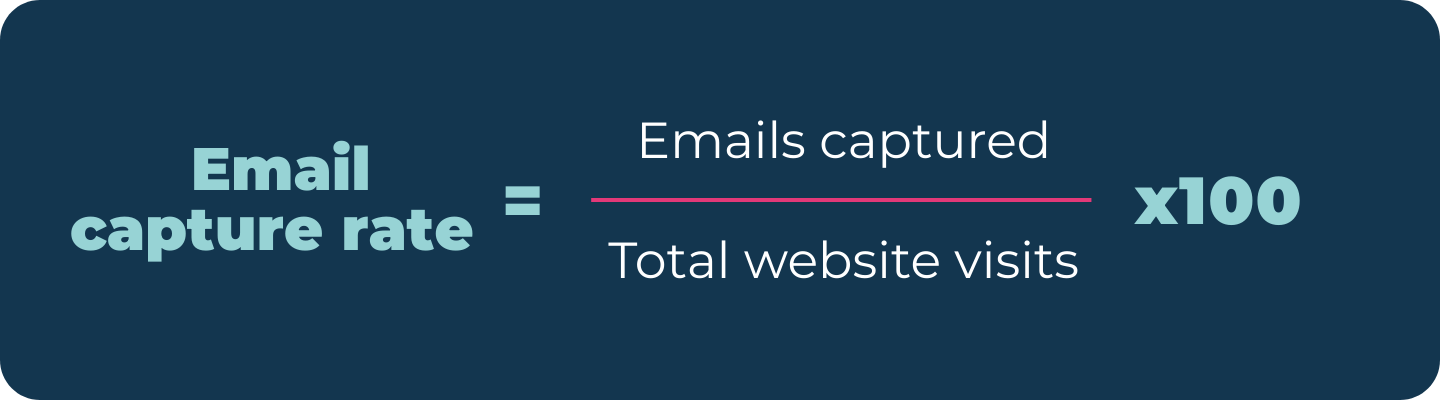
Email capture rate (the percentage of your site visitors who sign up for email) is one of the most important metrics in eCommerce.
Why email capture rate changes everything
Email marketing returns £36 on average for every £1 spent. For retail and eCommerce specifically, that figure rises to £45 per £1.
Well-run email programs drive 25–35% of total eCommerce revenue, rising to as much as 50% during peak seasons.
But all of that depends on one thing: having an email address to send to.
Your Klaviyo flows are only as powerful as the list feeding them. A 3% capture rate means 97% of your visitors walk away without you having any way to reach them again.
Double that capture rate, and you've doubled your retargeting audience, without spending an extra cent on paid acquisition.
There's an important knock-on effect here too. More email sign-ups mean more automation triggers, more abandoned cart recoveries, and more welcome flow conversions.
That improvement in email efficiency then makes your paid ads perform better.
Automated emails account for just 2% of total sends, but drive 37% of all email-driven sales. The capture rate is the tap, and everything downstream depends on how wide you've opened it.
The average signup form is doing the bare minimum
The average eCommerce email pop-up converts around 4.8% of visitors. The top performers are achieving 10%, 15%, and even higher.
That gap isn't luck. It's the result of deliberate optimization, and most brands skip it.
58% of companies make website changes based on opinions rather than data. Most sign-up forms are set up once, given a generic offer, and left alone indefinitely.
The problem is that your sign-up form isn't just a data capture tool. It's often the first interaction a new visitor has with your brand.
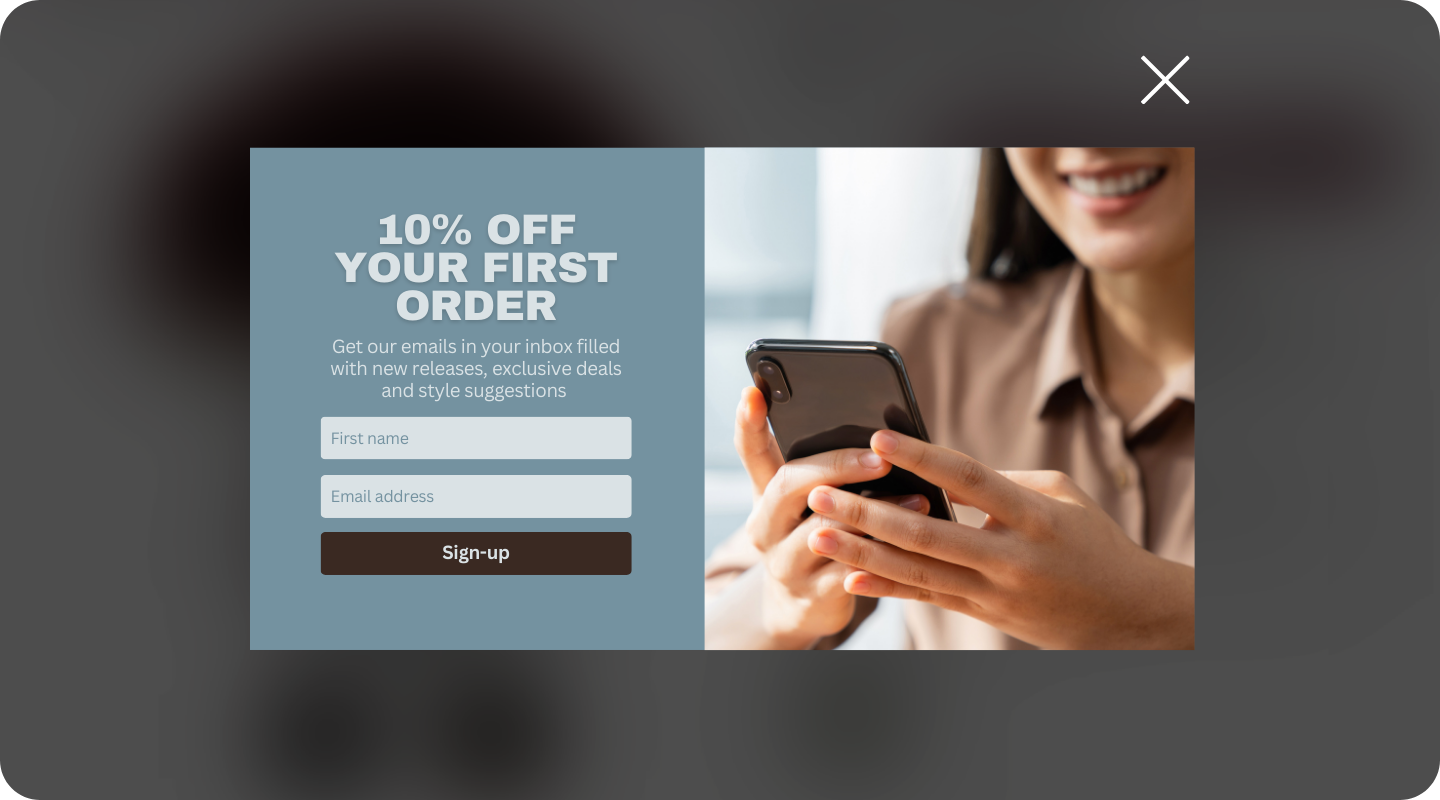
Getting this right isn't complicated. But it does require you to stop treating the sign-up form as an afterthought.
Incentive design: what actually works
The data on incentives is pretty clear.
Pop-ups offering discounts convert better than pop-ups with no incentive. But the size of the discount can matter less than you might think. There can be only a small difference between offering 10%, 15%, or 20% off; just having a discount drives signups.
That said, if you're going to pick a number, some data suggests 15% is the sweet spot for converting sign-ups into actual purchases.
Free shipping is also worth testing, especially if your checkout abandonment is driven by shipping costs. Free shipping removes the number one reason shoppers abandon the shopping cart, cited by 48% of buyers.
The key is to view the sign-up incentive as part of your broader promotional strategy. A smarter offer at sign-up can set the tone for the entire customer relationship that follows.
Timing, format, and personalisation
These details have a big impact on your conversion rate.
How fast do your pop-ups appear after someone lands on your site? This is an optimizable factor. Give visitors a moment to engage with your site before asking for something.
Mobile pop-ups convert at different rates than desktop pop-ups for email capture. If you haven't specifically optimised your sign-up form for mobile, separate design, separate timing, separate offer, you could be leaving a lot behind.
Personalization makes an even bigger difference.
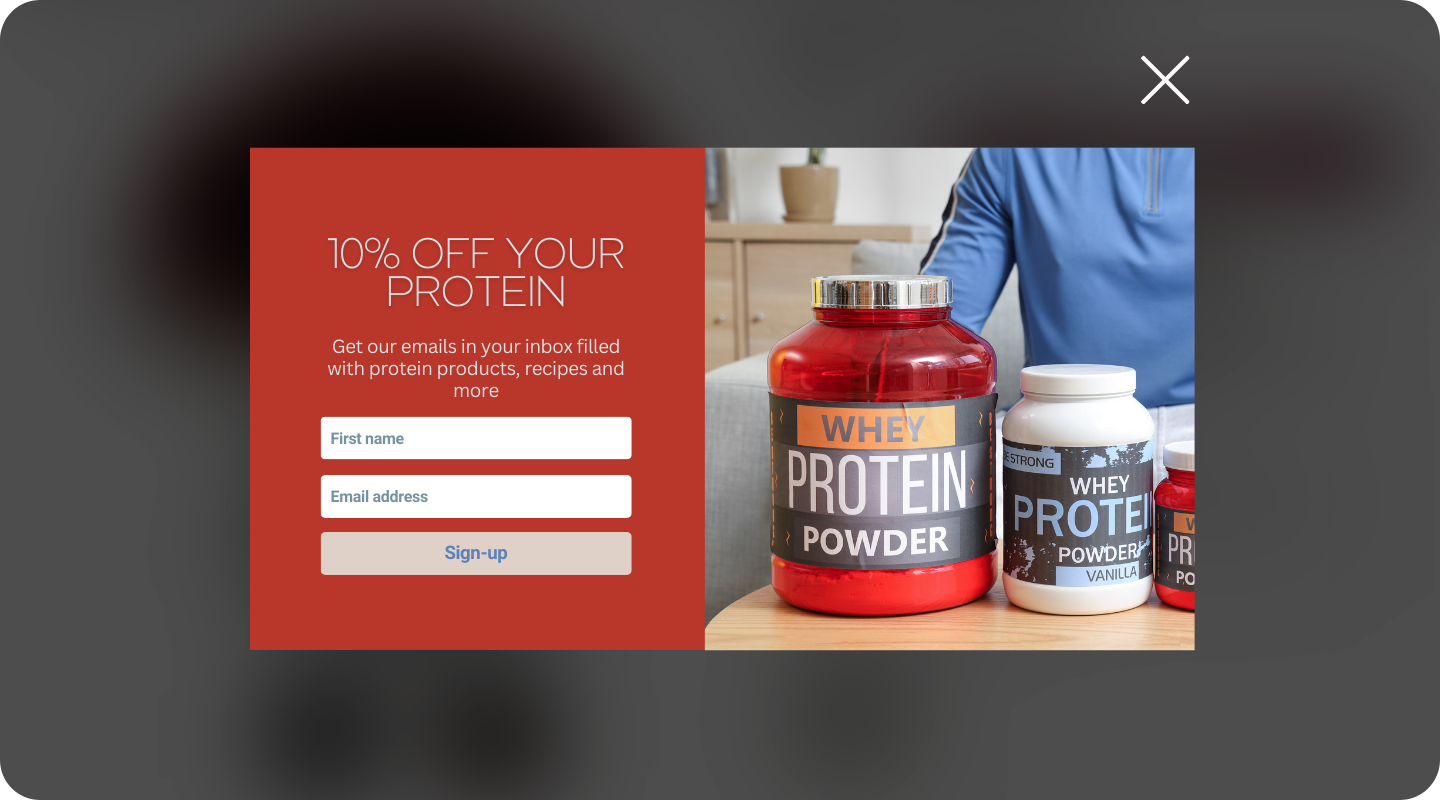
Pop-ups targeting new visitors specifically convert at a higher rate than untargeted visitors. Knowing who you're talking to before you make the offer matters.
Testing: the discipline most brands skip
Here's the uncomfortable reality: only 42% of businesses run A/B tests even once per quarter.
Yet A/B testing your sign-up form can increase click-through rates, and businesses that invest in conversion rate optimization see an average ROI of 223% from that investment.
You don't need a complex testing program to get started. Test one element at a time:
- Offer type: % discount vs free shipping vs early access
- Timing: 5 seconds vs 10 seconds vs exit intent
- Format: banner vs modal vs fullscreen
- Copy: "Get 15% off your first order" vs. "Join the community and save 15%"
- Image vs no image: adding an image to a pop-up boosts conversion by 43%
The goal isn't to run every test at once. It's to build a habit of making decisions based on data, not guesses.
Closing the loop with Klaviyo
Once you've captured the address, you have a narrow window to act.
- 75% of eCommerce conversions from email happen within 24 hours of a subscriber signing up.
- Welcome emails generate 320% more revenue per email than standard promotional sends.
- A three-email welcome series generates 90% more orders than a single welcome email.
This is where Klaviyo earns its keep. But it only works if the incoming data is clean, segmented, and matched to the right flow.
RevLifter's integration with Klaviyo connects your onsite signup campaigns directly to Klaviyo, so every email captured is routed to the right flow based on the offer shown, the page visited, or the behaviour that triggered the signup. Better data means better automation.
Where to start
If you're on Klaviyo and not actively optimising your email capture rate, you're skipping the first step.
Check your current capture rate. Most eCommerce sites sit between 1% and 3%. Getting to 5–10% is achievable with the right offer, timing, and testing, and the downstream impact on your flows, ROAS, and overall eCommerce conversions is significant.
The platform isn't the strategy. What you do with it is.