Why Shopify brands are most at risk of the discount trap

Shopify is brilliant at removing friction. You can go from idea to live store in a weekend. Payment processing, inventory, email flows, and abandoned cart recovery.
All of it is set up and waiting. It is, genuinely, one of the best things to happen to independent retail.
It is also one of the fastest ways to train your customers not to pay full price.
That is not Shopify's fault. But it is a Shopify problem, and it is one worth taking seriously.
Count your discount touchpoints
Most Shopify brands, if they are honest, have more discount touchpoints than they realize. Not because they planned it that way, but because each one felt reasonable at the time.
A welcome email with 10% off for new subscribers, an abandoned cart sequence that escalates to 15% off, and a re-engagement campaign that offers 20% off often add up without brands realizing it.

A customer exposed to all these touchpoints is unlikely to ever pay full price. This system develops on its own, leading to autopilot discounting.
The maths that should make you uncomfortable
Here is the number that changes the conversation. According to Square's analysis of retail discounting, a 20% discount on a product with a 40% gross profit margin cuts your profit per unit by 50%.
Not 20%. Half.
DTC brands typically run net margins of 10–20%. That is the whole reason selling direct is worth it: you keep more of each sale than you would through wholesale or retail distribution.
But that advantage disappears fast when discounting stacks up across your email flows, seasonal campaigns, and exit-intent popups.
A bad Black Friday does not just cost you a week of margin. If it conditions a new cohort of customers to wait for your next sale, it costs you a year.
Why Shopify brands are especially exposed
There are roughly 28 million Shopify stores. That is a lot of competition, and most of them are using price as the lever.
With discount apps, coupon aggregators, and cashback sites, the infrastructure for hunting down a deal has never been more efficient.
With so many stores competing for the same customers, price has become the default differentiator. Shopify did not cause this, but it scaled it.
And with promo code issuance increasing 31% in the first half of 2024 compared to the same period the year before, the volume of discount signals reaching your customers is only going up.
“Plenty of consumers just want to receive their welcome promo code, place their order and then unsubscribe,” says Rose-Marie Clément, content strategist and email marketing specialist at Novatize.
They were never customers. They were just collecting your 10%.
This is not a bug in your strategy. It is what happens when discount access becomes the norm across an entire platform ecosystem.
The conditioning you did not mean to create
Think about what a new customer learns from their first three interactions with your brand.
They discover you through an ad. They browse, do not buy. They come back. An email arrives with 10% off for joining your list. They join. They buy. Good.
Two months later, they are thinking about buying again. They add to cart, leave. An abandoned cart email arrives. Then another. Then a 15% off offer. They buy.
Then nothing for a while. You send a re-engagement email. 20% off, just for them.
Customers who repeatedly receive such offers quickly learn that patience and hesitation are rewarded, even if not by design.
What the best Shopify brands do differently
The brands that protect their margins succeed by implementing targeted, data-driven discounts. They focus on timing, customer behavior, and need rather than offering discounts broadly by default.
The difference is knowing which customers need an incentive and which ones do not. Someone who has visited a product page four times in a week, added to cart and returned to the site the next day is not a fence-sitter.
They are about to buy. Sending them a discount email is just giving money away.
The fence-sitter is someone browsing across multiple categories, comparing products, and moving the cursor toward the back button. That is where an offer earns its place.
Effective brands use store data (dwell time, page revisits, add-to-cart behavior, exit patterns) to target discounts precisely. Act on these signals to ensure offers reach the right customers, rather than sending the same discount to everyone.
When luxury accessories brand Radley applied this approach (suppressing offers for high-intent shoppers while targeting hesitant ones), they achieved incremental revenue while incurring 8% lower promotional costs than with their previous sitewide discount approach.
What testing can do for your minimum viable offer
Before setting a discount, ask: What is the smallest incentive that will convert this specific customer? This approach leads to more deliberate and profitable offers.
Sometimes it’s free express shipping. Sometimes it’s a free gift with purchase. Sometimes it is a first look at a new product drop. A percentage discount is not always the answer, and it is rarely the cheapest one.
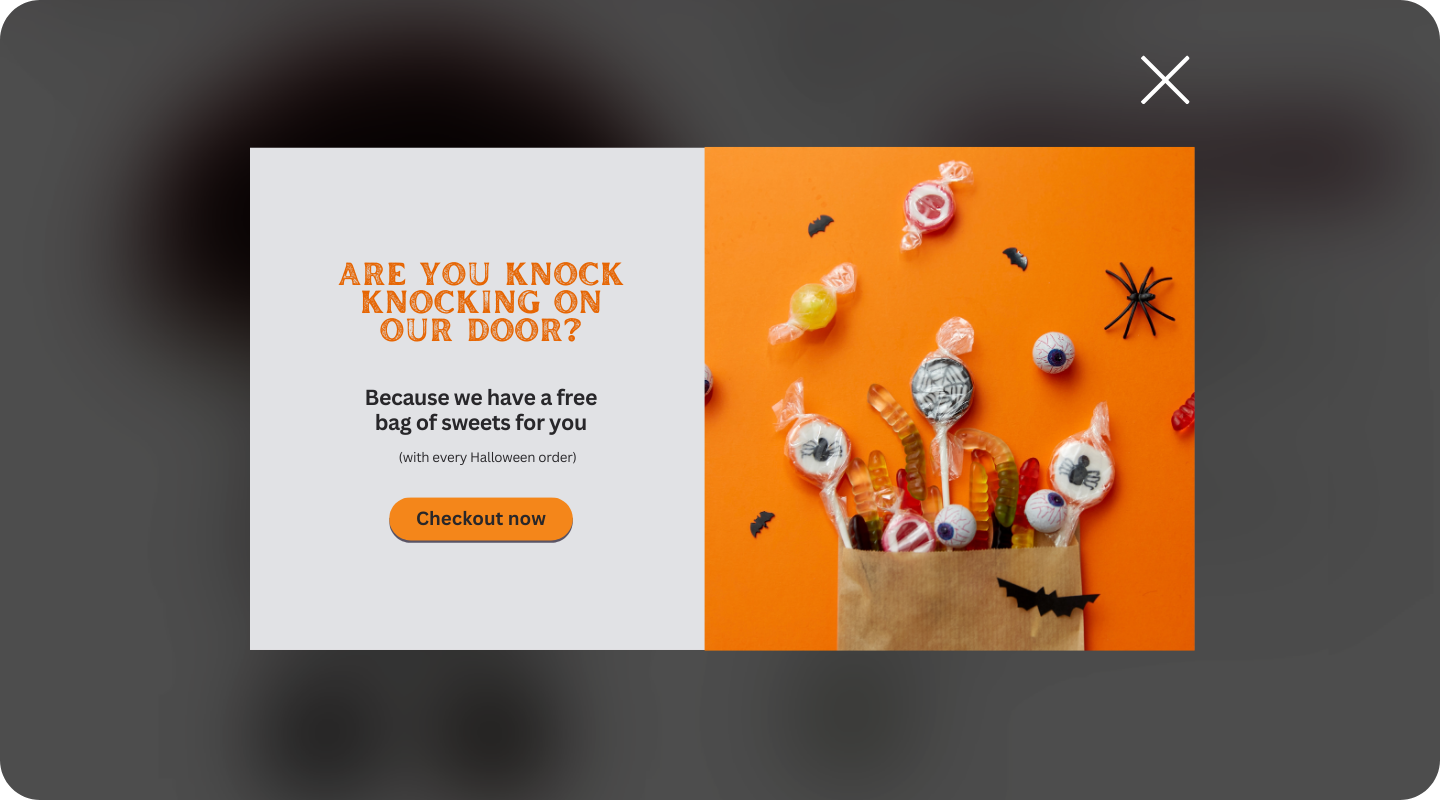
Consistently test both the amount and format of your offers and use actual performance data to guide decisions. This testing approach prevents dependence on default discounts.
The bottom line
Shopify gives you something most retailers never had: direct access to your customers and every penny of margin your product earns. Discounting by default is the fastest way to restore that advantage.
Focus on three key actions:
- Regularly audit your email flows and discount triggers.
- Identify and remove unnecessary or overlapping offers that may weaken your pricing power.
- Prioritize strategies that reinforce your value, build trust, and differentiate your brand to maintain long-term profitability.