Why discounts are turning into a CAC strategy
Customer acquisition cost (CAC) used to live in the marketing team's spreadsheet, not the promotions calendar - but that's changing.
This month, a few of the biggest platforms in eCommerce all made the same bet, from different angles, as Reddit's eCommerce community recently rounded up: stop pricing the discount, start pricing the customer. TikTok, Apple and Shopify are each turning what used to be a markdown into a CAC decision.
It's a small shift in language with a big shift in the math behind it. Once you start pricing the customer rather than the product, the whole promotional calendar looks different.
The CAC shift, in three moves
Shopify makes it most obvious.
Its expanded Shop Campaigns, now live in the UK and Australia, let merchants set a target cost per customer. Shopify buys the media and only charges when someone converts. That's CAC, priced and sold as the product itself, not a side effect of the promotion.
TikTok is testing Shop Plus, a paid membership ($6–$15 a month) bundling free shipping with built-in coupons. A $57 item becomes $47 with free 3-day shipping, no code needed. The subscription fee effectively pays down the acquisition cost of each subsequent order, spreading it across the relationship rather than absorbing it in a single sale.
Apple launched Apple Upgrade with Klarna: 24-month leases on iPhone and Watch, 36-month leases on Mac and iPad. Not a discount at all, technically. A way to spread the acquisition cost over time rather than paying it up front, with a financing partner bearing the risk.
Three different mechanics, but the same underlying move: reframe "how much off?" as "how much to acquire, and over what time?"
From discount to CAC line item
A blanket discount is a cost you absorb on every order, gone the moment the sale closes. A subscription fee, a leased payment plan, a media buy priced on conversion: those turn promotion spend into something closer to a subscription business itself.
Predictable, recurring, easier to forecast against, and easier to defend in a budget meeting.
You don't need to be TikTok-sized to borrow the logic. The question worth asking isn't "what discount converts this shopper?" It's "what's this shopper worth to acquire, and what's the cheapest, most reliable way to get there?" That's a CAC question wearing the clothes of a discount, and most promotion calendars still don't ask it.
It also reframes a problem we flagged last week: the trust gap. DHL's 2026 eCommerce trends report found 77% of businesses believe shoppers trust their seasonal offers, but only 54% of shoppers actually do. A subscription or a locked-in lease sidesteps that gap entirely.
There's no code to doubt, because there's no code.
Where CAC gets spent or saved: checkout
Checkout is where most of that acquisition cost quietly leaks away.
PYMNTS estimates that $349 billion could move through checkout more easily if the right offer applied automatically, rather than asking a shopper to find and paste a code. Every failed code is a customer you already paid to acquire who walks away at the final step. The same DHL report puts a number on that too: 58% of deal seekers abandon their basket the moment a discount code fails to apply.
That's not a pricing problem. It's a CAC problem, twice over. Once when you spent to bring the shopper to checkout, and again when a broken code sends them away without converting.
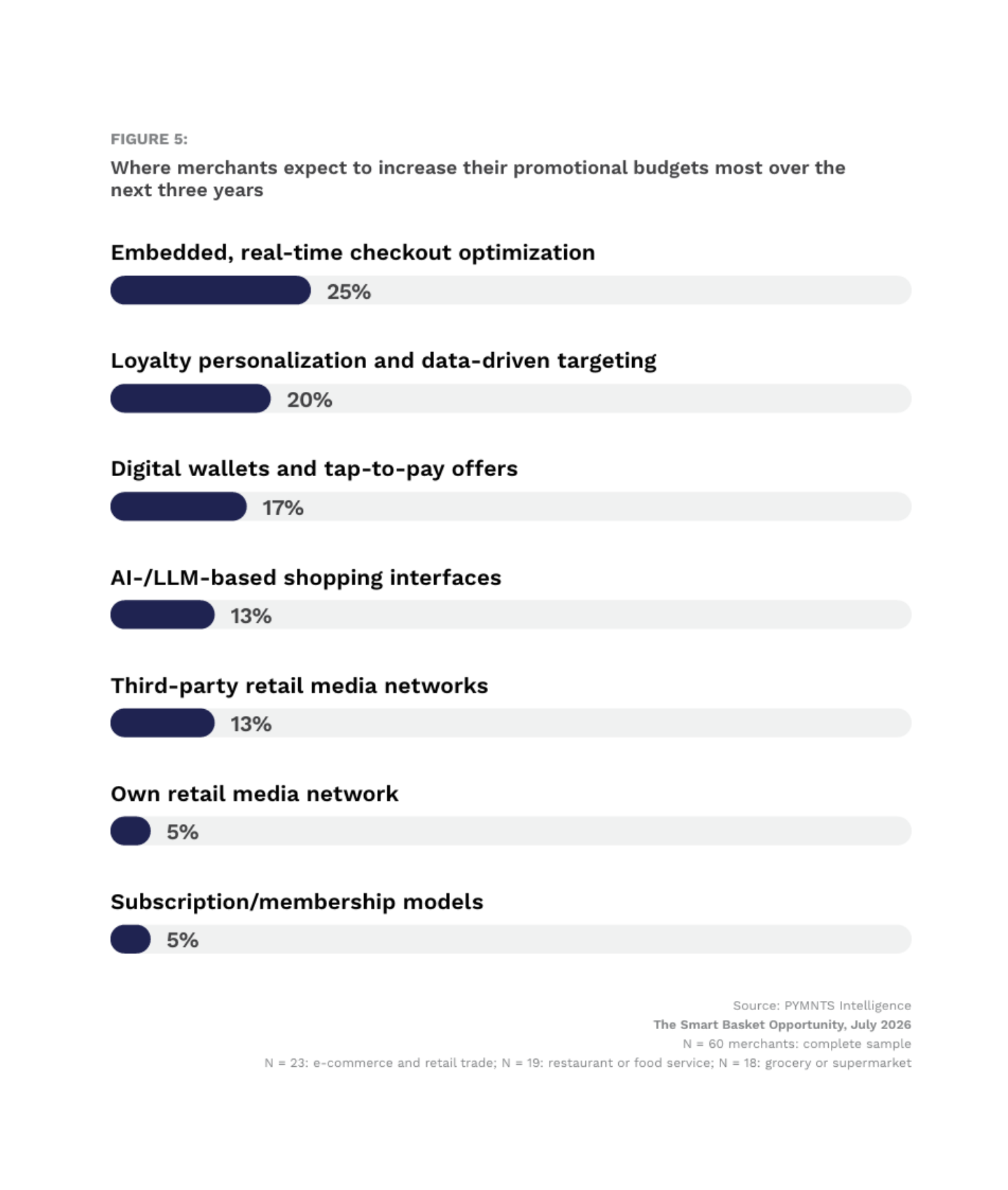
The data suggests smarter checkout pays off even without a formal membership tier attached. Merchants generated $79 for every $1 spent on offers this year, up from $68 last year.
Lululemon saw an 8% lift in ad return using AI-driven Performance Max campaigns, and retailers with clean, well-managed product data have reported roughly 300% first-year ROI with far fewer listing errors dragging down conversion.
The common thread isn't a deeper discount. It's the offer to automatically find the right shopper, which is really just CAC being managed in real time instead of being set once a quarter and left alone.
The catch: using the tactic isn't the same as winning with it
Here's the number that should slow you down before you copy any of this: 73% of merchants already run targeted offers. Only 48% call them their most successful tactic.
That's a lot of retailers doing the "right" thing on paper and still not seeing their CAC improve. Adopting smart targeting or a loyalty tier isn't the finish line. Execution, how well the offer matches the shopper and the moment, is where most of that gap lives.
A targeted offer aimed at the wrong shopper, or shown at the wrong point in their visit, still costs you the same acquisition budget as one that lands.
What this means if you're not TikTok, Apple or Shopify
Most retailers aren't launching a $6-a-month membership next quarter, and don't need to. But the CAC logic travels down-market fine:
- Treat a chunk of your promotion budget as a CAC line, not a blanket cost. Know what a converted customer is actually worth before you decide what to give away.
- A small loyalty perk, free shipping over a threshold, early access, and a point system do the same acquisition-cost job as a paid membership, without asking shoppers to pay upfront.
- Fix the checkout leak before you fix the offer. A code that fails is CAC; you already spent, walking out the door.
- If you already run targeted offers, go find out which side of the 73%/48% gap you're on, and whether your CAC is actually moving. That answer matters more than launching a new tactic.
Bottom line
The discount code isn't disappearing. But the biggest platforms in eCommerce are betting that a standing relationship, paid, leased or media-funded, lowers CAC better than a one-time markdown ever could.
Worth testing on a smaller scale, and worth checking your checkout for leaks, before subscription pricing becomes the only way shoppers expect to buy.