Cashback isn’t a strategy, it’s a leak
New research says eCommerce marketers plan to allocate 63 cents of every new marketing dollar to AI commerce tools and cashback and savings apps, rather than to traditional digital advertising.
Cashback and savings apps alone are set to climb from 18% of performance marketing budgets today to 30% by 2027. Today, 16% of commerce leaders call them core or strategic. By 2027, 41% expect to. And only 18% think traditional search will still be their main route to shoppers.
That is not a tweak, it’s a whole industry changing its mind.
For many retailers, it is the same money doing the same job, but just looking different.
Why it sounds sensible
The logic is easy to follow.
Ad costs keep rising, and it gets harder to tell what caused sales. Every quarter, platforms ask for more money but show slightly worse results.
Meanwhile, cashback apps report great success. A shopper clicks, buys, and the app sends you a clear credit for the sale. You only pay when a sale happens.
Everything about it looks like performance marketing working the way we’ve always been told it would.
The problem with things that provide nice, tidy reports
Cashback pays out after the decision.
By the time a shopper opens a cashback app or clicks the browser extension, they have usually already picked the product. Often, they have chosen you. Some are even on your checkout page.
Think about how this moment really happens. The shopper has filled their basket. Then they remember the extension is installed, so they check. The extension activates, claims the click, and credits the sale to the app.
The app is the last thing they touched. In most attribution models, the last thing touched earns credit.
That is not the same as the app causing the sale.
It is the oldest trick in performance marketing, and it has a well-documented cousin: branded search.
What the incrementality data says
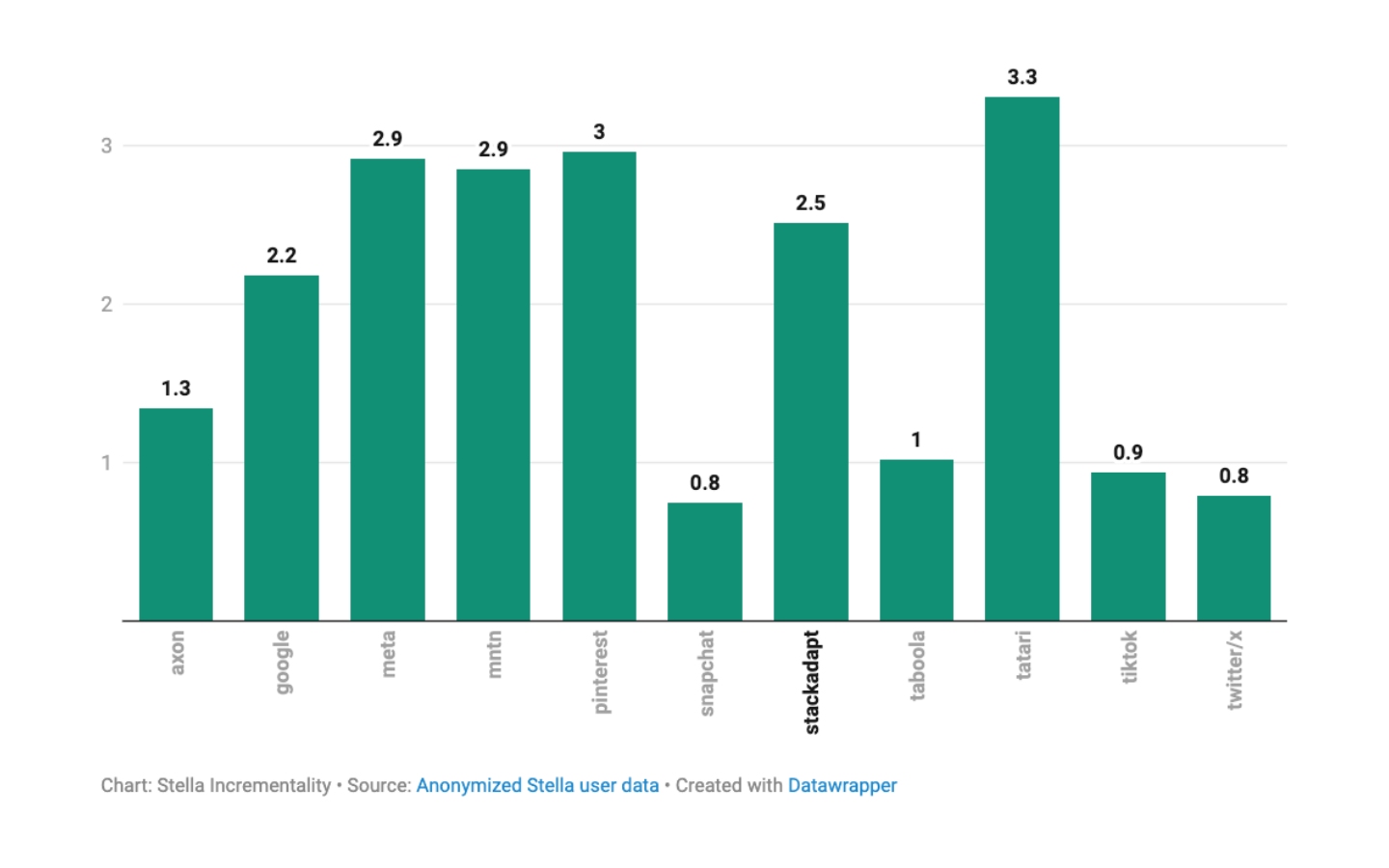
Stella ran 225 location-based tests between August 2024 and December 2025, mostly with Shopify direct-to-consumer brands. Geo tests are the closest the industry has to a clear result. You turn off a channel in one area, keep it on in a similar area, and see what really happens to sales.
No guessing, no tracking cookies. Just comparing before and after.
Here is how the channels ranked on incremental ROAS:
- Performance Max: 2.98x
- Meta: 2.92x
- YouTube: 2.17x
- Google Shopping: 1.86x
- Search, non-branded: 1.46x
- Search, branded: 0.70x
That last point is important. Branded search returned less than 1 pound for every pound spent. Not just a weak return but a negative one.
The difference between what platforms report and what geo tests show was two to three times for most channels. For branded search, it was five to ten times.
Branded search is the clearest example of paying for customers you already have. Someone types your name into Google. They were already coming to you. You pay to appear above the free result you would have gotten anyway, and the platform counts it as a win.
Cashback does the same thing at the other end of the journey.
Swapping one leak for another
Put the two findings side by side, and the picture gets uncomfortable.
Budget is moving from channels that exaggerate their impact to a channel that does the same. The reports still look good. The extra revenue might not change at all.
You have not fixed the problem. You’ve just moved it somewhere else.
One more detail is worth knowing. The research comes from Northwestern University’s Retail Analytics Council and Minty. Minty is a cashback app. And the 81% figure doing the rounds, the one about cashback being the most helpful form of marketing for shoppers, is 81% of marketers agreeing, not shoppers saying so.
(We’re not saying the numbers are wrong. We are saying it is worth knowing who is behind them.)
When cashback does earn its keep
This is not an argument for switching it all off.
Cashback genuinely works in a few places, and they are worth naming, because the difference between those and the rest is where your margin lives.
Genuine new customers
If the app shows you people who have never bought from you, that is gaining new customers and is worth paying for. Separate your cashback reports by new and returning customers. These two numbers usually tell very different stories.
Categories where shoppers compare hard
In electronics, travel, and products where brands are very similar, cashback can be the deciding factor. In categories where people buy based on taste or habit, it usually is not.
Reward rather than acquisition
When used to reward existing customers, cashback is a perfectly reasonable retention spend. Just count it as retention, not growth.
The problem is not the channel. It is treating the cost of keeping customers as a win for getting new ones.
Four things worth checking before you reallocate
1. Run a real holdout
Choose one area, turn off your cashback channel for four weeks, and compare results with a similar area. Four weeks is usually enough to get clear results without causing problems. If no one agrees to the test, that shows how confident the business really is.
2. Split the reporting by new and returning
Any channel that activates near checkout will mostly reach people who already know you. If 80% of your cashback sales come from returning customers, you are not buying growth. You are paying for loyalty discounts.
3. Look at where your money lands in the journey
Cashback is credited to the shopper after they have made their choice. Branded search reaches them after they have typed your name. If most of your budget is spent there, you are just paying for sales that would happen anyway.
4. Change the question in your promotions review
Not "did this lead to a sale?" but "would this have led to a sale anyway?" Les Binet's work with Nielsen shows that about 84% of price promotions lose money, and that does not get better just because a different partner handles the discount.
Where we think the money should go
The point of a promotion is to change an outcome.
That means finding shoppers who were going to leave and giving them a reason to stay. It also means letting those who were always going to buy pay full price without interruption.
Most promotional spending fails this test, not because the offer is bad, but because it goes to everyone. A channel that activates at checkout cannot distinguish between these two groups, and it was never designed to.
RevLifter is built on that exact idea. It reads the shopper's intent while they are still deciding, predicts who really needs an incentive, and spends only on them. Radley increased conversions by 21% and average order value by 34% while spending 8% less on promotions because the offers went to fewer people who needed them more.
Cashback will still have a place, as will paid search. But a budget that moves fro