
Why deal seekers might not trust your discount
Discounting is still the biggest lever in eCommerce. Almost every shopper is looking for one.
But a new problem is emerging: shoppers don’t always believe the discount is real. And that shift changes what retailers need to focus on.
DHL’s 2026 trends report found that 90% of shoppers now identify as deal seekers. That’s nearly everyone. But only 54% of them trust seasonal discount prices. That gap between “I want a deal” and “I believe this deal” is where retailers are losing sales, not just where they’re competing on price.
For years, the assumption has been simple: the bigger the discount, the more sales. That’s no longer the full picture. A shopper who doesn’t believe your 30% off banner will be moved by making it 40%.
They’ll just leave. Trust has become its own kind of currency, and right now, many retailers are running low on it.
The cost of a broken promise
Trust doesn’t fail quietly. When it breaks, shoppers leave. The same DHL report found that 58% of deal seekers abandon their cart when a discount code fails to work. That’s more than half of your most promotion-hungry customers, gone, because a code didn’t apply.
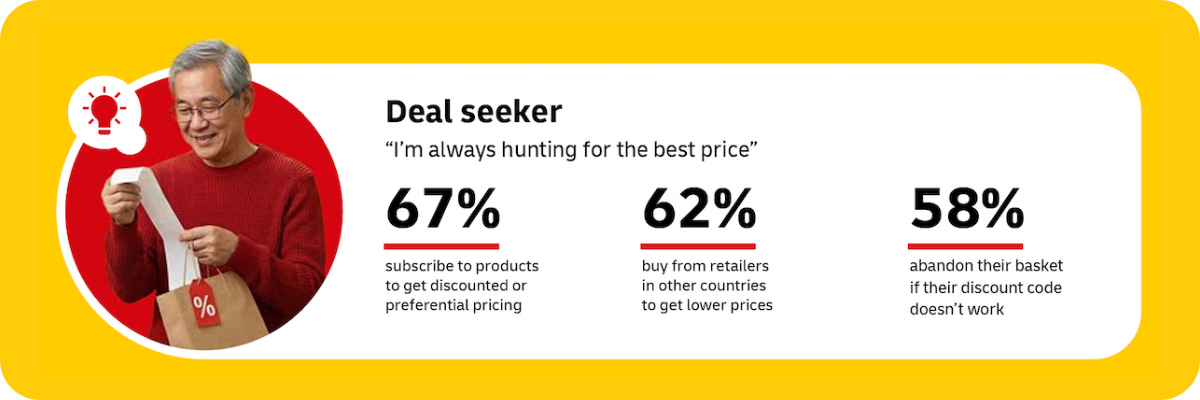
Here’s the harder part: only 39% of businesses count broken codes as a top reason for cart abandonment. Most retailers are looking in the wrong place when they try to fix drop-off.
They tune the size of the discount. They add urgency messaging, countdown timers, or pop-ups. Meanwhile, the actual leak is a code that silently fails at checkout, or an offer that doesn’t clearly apply to what’s in the basket.
Think about what that moment feels like for a shopper. They’ve found a product and a code, and they've done the work. Then the code doesn’t apply, or the price at checkout doesn’t match what they were promised.
That’s not a small glitch. It’s a broken promise, and it lands right at the point where you needed them to trust you most.
If shoppers can’t trust that a discount will work, the size of the discount stops mattering. You can offer 50% off and still lose the sale if the mechanics fail. This is why checking your promotions end-to-end, not just at launch but continuously, matters as much as the offer itself.
Platforms are already tightening the rules
This isn’t just a retailer problem. Amazon has built trust checks directly into its coupon rules, requiring every coupon offer to sit within a 5% to 50% range. Go below or above that, and the offer isn’t allowed. It’s a guardrail against discounts that look inflated or too good to be true, and it shapes what kind of promotions sellers can even design.
This matters beyond Amazon’s own marketplace. It’s a signal of where the wider industry is heading. Platforms, regulators, and shoppers are all converging on the same idea: a discount needs to be honest to be effective. Retailers who treat this as a compliance checkbox are missing the bigger point. These guardrails exist because inflated or unclear discounts erode the exact trust that makes promotions work in the first place.
Amazon is also nudging sellers in a new direction. From 15 January 2026, its MCF Preferred Pricing programme gives multi-channel sellers up to 15% off outbound fulfilment fees and up to $1.00 per unit in FBA credits, based on rolling 12-week volume. It’s an incentive to lean harder on Amazon’s own fulfilment network, and a sign of how much platforms now shape pricing and promotion strategy, not just retailers.
For sellers running promotions across multiple channels, this adds another layer to plan around. A discount strategy now has to account for platform rules, fulfilment costs, and margin, all at once. Getting this wrong doesn’t just cost money. It can mean an offer gets blocked before a shopper ever sees it.
Value is expanding beyond the price tag
Shoppers are getting more resourceful, and retailers are responding. In the US, discount retailers are growing quickly enough that established brands are having to rethink pricing, quality, and assortment just to keep up. Shoppers who might once have paid full price at a familiar brand are now comparing that price against a discounter nearby or a marketplace just a few clicks away.
In the United States, discount grocery stores are also expanding. For example, ALDI plans to open 70 new stores over the next three years, with more than 75% of them discount-focused. This isn’t a trend confined to one category or one region. It’s happening across grocery, fashion, and general retail, throughout the US and Europe alike.
The message is consistent: shoppers aren’t just chasing the lowest price. They’re chasing value they can rely on. A retailer that can consistently deliver honest, working discounts builds a kind of loyalty that a one-off flash sale never will.
Convenience closes more sales than discounts do
Here’s a stat worth sitting with. In DHL’s research, free delivery influences 50% of purchase decisions. Free returns influence 41%. Both outrank discount size as a reason people actually buy.
This doesn’t mean discounts don’t matter. It means they work best paired with a smooth, low-friction experience. A 20% off code means less if the customer still has to pay for delivery or worry about returns. Convenience and trust go hand in hand.
A shopper who trusts that returns will be easy is more likely to trust that your discount is genuine, too. These signals reinforce each other.
For retailers planning next quarter’s promotions, this is worth building into the offer itself. Instead of leading with a percentage off alone, consider what happens when a discount is bundled with free shipping, or when a returns guarantee is shown right next to the price. The combination does more work than either piece alone.
What’s coming next: personal, not broad
The next shift is already starting. Early pilots like Google’s Direct Offers are testing individualised, exclusive discounts delivered inside AI-generated recommendations. Instead of a single seasonal sale blasted to everyone, shoppers may start seeing offers tailored to what they specifically want.
This moves promotions from broad and seasonal to precise and personal. A shopper browsing running shoes might see a discount tailored to their size, brand preference, and past purchase pattern, rather than a generic 20% off sitewide banner.
That kind of precision tends to build more trust, not less, because the offer feels relevant rather than arbitrary.
Retailers who get comfortable with targeted offers now will have a head start when this becomes standard. That means testing segmented promotions, tracking which offers convert for which shopper groups, and building the onsite infrastructure to deliver different offers to different visitors without slowing the page down or confusing the checkout flow.
What retailers should do about it
A few practical steps emerge from all this.
Check that your discount codes actually work, every time, on every device, and at every stage of checkout. Broken codes are costing you more sales than most reporting shows, and they’re often invisible until you go looking for them.
Design offers that fit platform rules, like Amazon’s 5% to 50% coupon range, and look at new incentives like MCF Preferred Pricing if you sell across channels. A discount that is rejected or flagged never reaches the shopper.
Pair discounts with free shipping and free returns whenever possible. These features influence purchases more than the discount itself, and together they help build the kind of trust that keeps shoppers coming back.
Start testing more targeted, individual offers now, before AI-personalised discounts become the norm. Small tests today, on segments or specific customer groups, will make the shift to full personalisation far easier later.
Review your promotion messaging with fresh eyes. Ask whether a shopper landing on your site for the first time would believe the discount they’re seeing, or whether it reads as inflated, vague, or too good to be true.
Trust, not the size of the markdown, is what decides whether a deal seeker becomes a customer. Get the basics right, and the discount can finally do its job.


