Skip the points: most loyalty programs end with a discount
Team RevLifter appeared on a recent episode of the Inside Commerce podcast. One topic caused a bit of murmuring—a simpler approach to loyalty.
Most loyalty programs end with the customer earning a discount anyway. So why not skip the cards, the admin, and the infrastructure, and just give the discount to the people who deserve it?
It’s a fair challenge, especially for retailers without the scale or cross-channel reach to make a full program worth running.
The loyalty detour
There are several types of loyalty programs. A couple of common ones:
Points-based programsCustomers earn points for every purchase. These points can be redeemed for discounts, free products, or special offers.
A points-and-tiers program is a long way around to a familiar destination.
Sign up. Collect points. Wait. Hit a threshold. Redeem for, more often than not, a discount you would have qualified for anyway.
Tiered loyalty programsCustomers move up loyalty tiers based on their spending or engagement levels. Each tier offers increasing benefits.
Simpler than a points program, but still a longer way to the end point. A discount.
Nobody’s actually that loyal
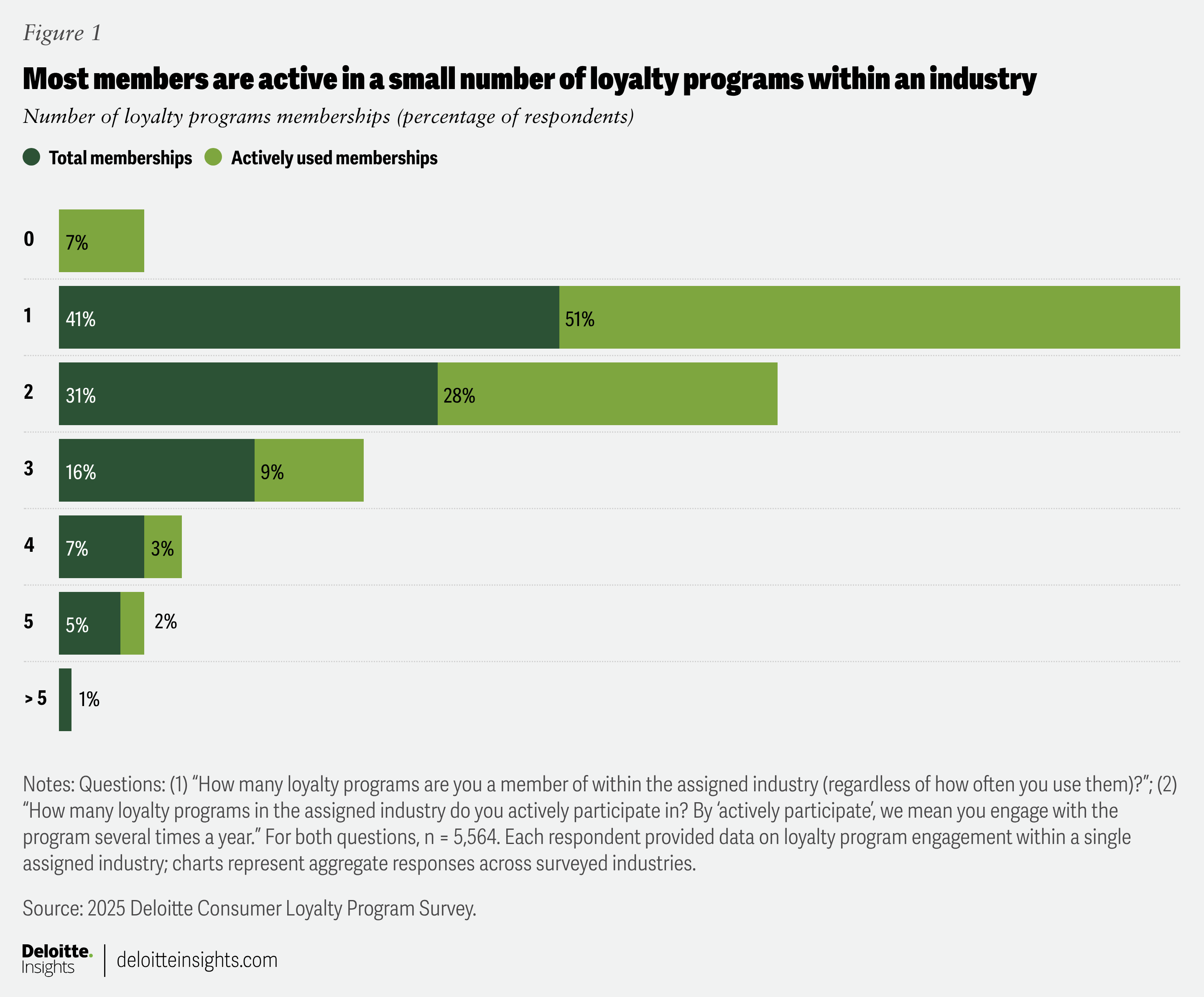
Deloitte’s 2025 Consumer Loyalty Program Survey (5,564 U.S. loyalty members, published January 2026) found the average consumer enrolls in 8 loyalty programs but actively uses only 5.
- Over half of members (51%) engage with just one program, no matter how many they’ve joined.
- 40% admit they sometimes forget to redeem their points.
Capital One Shopping’s research tells the same story from a different angle. The average consumer holds 9.3 active loyalty accounts. Once you count the ones gathering dust, that number climbs to 19.
Nineteen. For most people, that’s more loyalty programmes than close friends.
The gap isn’t the same for everyone, either. Deloitte found that younger members redeem far more promptly than older ones and want digital features that most programs still don’t offer: real-time tracking, payment integration, and instant notifications.
Nine in ten Gen Z and Millennial members found at least one of those useful. Fewer than three in four Boomers did.
So it’s not that people have gone off loyalty. It’s that most programs haven’t caught up with what a loyal customer now expects.
The redemption gap
Even the members who stick around don’t always cash in what they’ve earned.
40% of loyalty members told Deloitte they sometimes forget to redeem their points altogether. Not because the points aren’t there, but because redeeming them takes more effort than most people are willing to spend on a reward they half-remember signing up for.
Deloitte’s own fix for this is to "make redemption effortless." Which is a reasonable thing to ask of a system built, by design, to make a customer wait, track, and remember before they get anything back.
Compare that to a discount that just shows up while a shopper is deciding. There’s nothing to forget and nothing to redeem. The value lands at the moment it’s useful, not eighteen months later, when someone finally opens an app they installed and forgot about.
Even the loyalty industry is saying it.
This isn’t a hot take from an offers vendor with a horse in the race (that’s us, to be clear).
Bond Brand Loyalty, now in the 16th year of its annual report, put it plainly:
"The era of ‘more programs’ is over."
Bond’s own research draws a line between what it calls "artificial loyalty" (built on points, systems, and scale) and "emotional loyalty" (built on a brand that is actually worth coming back to). Only one of those reliably drives repeat spend.
The bit that’s genuinely hard to argue with
To be fair to loyalty programs, Deloitte also found that 72% of members say their favorite program makes them more likely to spend with that brand, and 56% say it increases how much they spend.
That’s real. It’s just not the full picture.
Those numbers describe a customer’s single favorite program, the one out of 8 they actually use. They say nothing about the other 7, or about the admin, tech stack, and reward catalog it takes to run a program most members will barely touch.
Every retailer runs a loyalty program hoping to be somebody’s favorite. Most are quietly funding somebody’s seventh.
What you’re actually paying for
Every loyalty program carries costs that show up whether or not a member ever logs in: a redemption catalog to maintain, a rules engine to run, a support team to field “where are my points?” queries, and a marketing calendar built around keeping a mostly dormant list warm.
None of that is cheap, and most of it is spent on people who were never going to lapse in the first place.
The alternative
If the goal is a customer who feels looked after, the card was never the point. The discount was.
Skip the enrollment, the tiers, and the points balance nobody checks. Use what a shopper is actually doing (not what they signed up for eighteen months ago) to work out who needs a nudge to buy, and give it to them. No card required.
That’s a smaller, sharper version of loyalty. It also happens to be the bit customers actually wanted.
What this looks like in practice
It doesn’t have to stay theoretical. It’s already showing up in how premium retailers, the ones most protective of margin and brand value, are handling discounting.
Pulling back on blanket offers, whether that’s a sitewide 10% or a loyalty tier that eventually hands out the same thing, comes from the same instinct. Both cost margin on customers who never needed persuading in the first place.
- Replace the card with behaviour. What someone’s browsing, how quickly, and whether they keep circling back to the same product tells you far more about whether they need a nudge than a points balance ever will.
- Replace the wait with timing. A discount that arrives while someone’s deciding is worth more than one that arrives because a threshold was hit six weeks ago.
Neither of those needs a sign-up form nor requires someone to keep track of their points total.
The takeaway
Loyalty programs aren’t wrong. They’re just solving a problem that most retailers don't need solved.
If the honest end state of your program is “give the customer a discount,” you can get there in one step instead of five.