Turn slow-moving inventory into profit without devaluing your brand

Every unsold item in your warehouse is money sitting still.
It costs you space. It ties up cash. And eventually, it pressures you into decisions that hurt your margins and trains customers to wait for sales to come in.
But here's the problem with traditional clearance tactics: they work too well at teaching shoppers to expect discounts everywhere, all the time.
According to BCG research, 30-40% of retail promotions are either inefficient or unprofitable. Worse still, 60% of consumers say they'd prefer more relevant promotions instead of just more promotions.
The answer isn't more aggressive markdowns. It's surgical precision.
This guide shows how to move slow-selling stock without broadcasting "we're desperate" to every visitor on your site.
The hidden cost of sitting stock
Before discussing clearance, let's examine what actually happens when inventory ages.
Carrying costs typically run between 20-30% of your total inventory value annually, according to Shopify. That includes warehousing, insurance, depreciation, and the opportunity cost of capital tied up in products that aren't selling.
Example: A fashion retailer holding £500,000 in seasonal stock pays £100,000-£150,000 per year just to store it.
Most retailers end up discounting more aggressively than necessary because they lack a plan.
Why blanket clearance sales backfire
When you run a site-wide sale, everyone sees it.
That includes the customer who was about to buy at full price. The loyal shopper who now feels foolish for paying more last week. And the bargain hunter who learns to wait for your next promotion.
BCG's research highlights that promotions often cannibalize each other when "everything is on promotion, everywhere, and targeted at everyone."
You're not just clearing stock. You're conditioning behaviour.
The alternative is targeted clearance: showing the right offer to the right person at the right time, without announcing it to everyone.
Target offers specifically to items that need movement
The first step in surgical inventory clearance is identifying which products actually need help.
Not every slow seller deserves the same treatment. Seasonal stock approaching its sell-by window needs different handling than deep inventory on styles that simply didn't perform. Products being discontinued require a different approach than items with size breaks or limited colour options remaining.
Once identified, you can create targeted campaigns that display discounts and promotions only to visitors who have shown interest in those specific products.
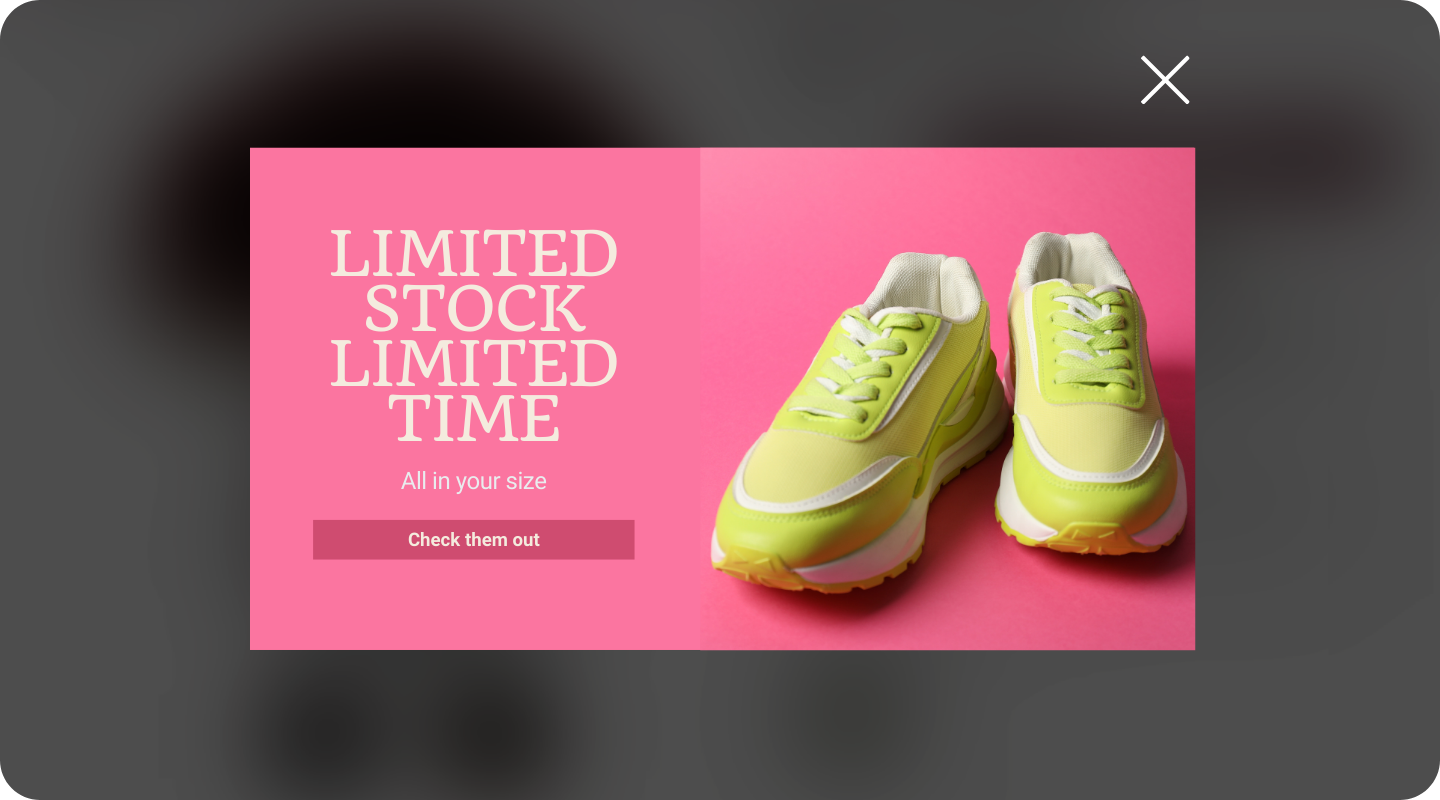
This approach works because you're not advertising your clearance to the whole site. The offer appears to be contextually relevant to someone already considering the product.
The result? You move stock without training your entire customer base to expect discounts.
Your eCommerce platforms should allow you to create rules based on product-level inventory thresholds, time since arrival, category tags, and visitor behavior signals, such as page views, shopping cart additions, and exit intent. Combining these data points creates genuine personalization rather than blunt site-wide promotions.
Protect bestseller margins while clearing aged inventory
Here's where many retailers go wrong: they include their bestsellers in clearance promotions "to drive traffic."
Your bestsellers don't need help. They're already selling. Every discount you give on a popular item is money left on the table.
BCG found that personalized offers yield three times the return of mass promotions. So why would you discount the products that customers already want to buy?
Instead, protect your heroes and focus promotional firepower on the products that actually need the boost.
In practice, this means excluding bestselling SKUs from all promotional overlays and codes. Set margin floors that prevent any offer from being applied to products with performance above certain thresholds. Create separate rules for high-margin versus low-margin categories, and reserve your most substantial discounts for products with the longest warehouse dwell time.
Example: An electronics retailer sets their eCommerce CRO rules to exclude the top 20% of SKUs by velocity from any promotional overlay. Slow-moving accessories get exit-intent offers. The flagship phone stays at full price.
This protects your customer experience with popular items while giving you room to be more aggressive on products that genuinely need clearing.
Timing strategies that don't signal "everything's on sale"
Timing matters as much as targeting.
Constant sales teach customers to wait. Sporadic, unpredictable offers keep shoppers engaged without creating expectations.
Behaviour-triggered offers work far better than scheduled sales. Instead of running promotions on a calendar, trigger offers based on individual visitor behaviour: exit intent on specific product pages, second or third visits to the same category, shopping cart abandonment with aged inventory items, or time on page exceeding average without conversion.
These offers feel personal rather than promotional. The visitor doesn't know everyone else sees the same thing. (Because they don't.)
Customer segment timing adds another layer of precision. Different customers should see clearance offers at different points. New visitors shouldn't see clearance offers at all—protect that first brand impression. Returning non-purchasers might receive a light incentive on slow-moving stock. High-intent abandoners get a targeted offer on items in their abandoned cart. Loyal customers receive early access to clearance sales before they become public.
This creates a conversion optimization funnel that matches promotional intensity to visitor commitment levels.
Inventory-led triggers automate the whole process. Set rules based on stock levels and time: when a product has been in stock more than 60 days with fewer than expected sales, when stock exceeds specific units with sell-through below threshold, or when you're approaching the end of the season.
Example: A fashion retailer sets automated rules to start showing 10% offers on products with less than 15% sell-through after 45 days. After 75 days, the offer increases to 20% for visitors showing exit intent.
These triggers automatically initiate targeted promotions, eliminating the need for constant monitoring and manual campaign setup.
Cross-sell approaches for out-of-stock or discontinued items
Here's an opportunity most retailers miss entirely.
When a product is out of stock or discontinued, most sites show a sad "not available" message. The customer leaves. The sale is lost.
Harvard Business Review research found that retailers can lose nearly half of intended purchases when customers encounter stockouts. According to McKinsey, 43% of consumers will simply buy from a different brand when faced with an out-of-stock situation.
But what if that moment of disappointment became an opportunity to move your slow sellers?
When a visitor lands on an out-of-stock or discontinued product, immediately show similar alternatives from your current inventory—particularly products from the same collection that are in need of movement. Position them as "you might also like" suggestions weighted toward overstocked items. Add a small incentive to try the alternative today.

This transforms a dead end into a retail conversion opportunity. You keep the customer, move slow inventory, and protect the overall customer experience.
For implementation, set up recommendation rules that prioritize overstocked products. Create specific out-of-stock page templates with promotional messaging. Use urgency messaging on alternatives and capture email addresses for back-in-stock notifications while retargeting with alternatives in the meantime.
This approach acknowledges the disappointment while offering a clear path forward.
Connect inventory management to your promotional strategy
Here's the fundamental shift: inventory management and promotions should be the same conversation.
Too often, merchandising teams handle stock and marketing teams handle promotions. They rarely share data or coordinate timing.
The result? Promotions that don't target the right products. Stock that ages because nobody knew it needed help. Markdowns that come too late and cut too deep.
An integrated approach requires a weekly review of inventory velocity by category and SKU, shared dashboards that show stock levels and promotional performance, automated triggers that connect stock thresholds to offer activation, and post-promotion analysis that measures both conversion and margin impact.
RevLifter's research with IMRG found that December consistently shows the lowest discount activity despite being the second-highest revenue month. Why? Because customers focus on buying the right gifts rather than hunting for savings.
That's a signal. Your discounting intensity should match the customer's intent, not your level of panic.
When you connect inventory data to promotional decisions, you can start promotional support earlier with lighter incentives, graduate discount depth based on actual stock movement, stop promotions when sell-through targets are met, and protect margin on products that don't need help.
Measure what matters
Finally, track the right metrics. Conversion rate alone doesn't tell the whole story.
For targeted inventory promotions, you need to measure the sell-through rate by SKU and category alongside the margin impact. Track incremental conversion. Did the offer change behaviour, or would they have bought anyway? Monitor stock turn improvement and analyse which customer segments respond to clearance offers.
This data feeds back into your strategy. You learn which products respond to which offers, which customer segments are discount-sensitive, and where you're wasting margin.
The surgical approach
Clearing slow-moving inventory doesn't require announcing a fire sale.
The best retailers treat promotions as precision instruments: targeted, timed, and connected to actual stock data.
Identify which products genuinely need movement. Protect bestsellers and high-margin items from unnecessary discounting. Show offers to exemplary visitors at the right moments. Turn out-of-stock frustration into redirection opportunities. Connect merchandising and marketing around shared data.
Your promotional budget is finite. Your brand perception matters. And your customers will respond to what you teach them.
Teach them that your brand delivers value through great products and relevant offers.
Not through constant sales that devalue everything.